// dominantField looks through the fields, all of which are known to
// have the same name, to find the single field that dominates the
// others using Go's embedding rules, modified by the presence of
// JSON tags. If there are multiple top-level fields, the boolean
// will be false: This condition is an error in Go and we skip all
// the fields.
func dominantField(fields []field) (field, bool) {
	// The fields are sorted in increasing index-length order. The winner
	// must therefore be one with the shortest index length. Drop all
	// longer entries, which is easy: just truncate the slice.
	length := len(fields[0].index)
	tagged := -1 // Index of first tagged field.
	for i, f := range fields {
		if len(f.index) > length {
			fields = fields[:i]
			break
		}
		if f.tag {
			if tagged >= 0 {
				// Multiple tagged fields at the same level: conflict.
				// Return no field.
				return field{}, false
			}
			tagged = i
		}
	}
	if tagged >= 0 {
		return fields[tagged], true
	}
	// All remaining fields have the same length. If there's more than one,
	// we have a conflict (two fields named "X" at the same level) and we
	// return no field.
	if len(fields) > 1 {
		return field{}, false
	}
	return fields[0], true
}

var fieldCache struct {
	sync.RWMutex
	m map[reflect.Type][]field
}

// cachedTypeFields is like typeFields but uses a cache to avoid repeated work.
func cachedTypeFields(t reflect.Type) []field {
	fieldCache.RLock()
	f := fieldCache.m[t]
	fieldCache.RUnlock()
	if f != nil {
		return f
	}

	// Compute fields without lock.
	// Might duplicate effort but won't hold other computations back.
	f = typeFields(t)
	if f == nil {
		f = []field{}
	}

	fieldCache.Lock()
	if fieldCache.m == nil {
		fieldCache.m = map[reflect.Type][]field{}
	}
	fieldCache.m[t] = f
	fieldCache.Unlock()
	return f
}

func isValidTag(s string) bool {
	if s == "" {
		return false
	}
	for _, c := range s {
		switch {
		case strings.ContainsRune("!#$%&()*+-./:<=>?@[]^_{|}~ ", c):
			// Backslash and quote chars are reserved, but
			// otherwise any punctuation chars are allowed
			// in a tag name.
		default:
			if !unicode.IsLetter(c) && !unicode.IsDigit(c) {
				return false
			}
		}
	}
	return true
}

const (
	caseMask     = ^byte(0x20) // Mask to ignore case in ASCII.
	kelvin       = 'K'
	smallLongEss = 'ſ'
)

// foldFunc returns one of four different case folding equivalence
// functions, from most general (and slow) to fastest:
//
// 1) bytes.EqualFold, if the key s contains any non-ASCII UTF-8
// 2) equalFoldRight, if s contains special folding ASCII ('k', 'K', 's', 'S')
// 3) asciiEqualFold, no special, but includes non-letters (including _)
// 4) simpleLetterEqualFold, no specials, no non-letters.
//
// The letters S and K are special because they map to 3 runes, not just 2:
//   - S maps to s and to U+017F 'ſ' Latin small letter long s
//   - k maps to K and to U+212A 'K' Kelvin sign
//
// See http://play.golang.org/p/tTxjOc0OGo
//
// The returned function is specialized for matching against s and
// should only be given s. It's not curried for performance reasons.
func foldFunc(s []byte) func(s, t []byte) bool {
	nonLetter := false
	special := false // special letter
	for _, b := range s {
		if b >= utf8.RuneSelf {
			return bytes.EqualFold
		}
		upper := b & caseMask
		if upper < 'A' || upper > 'Z' {
			nonLetter = true
		} else if upper == 'K' || upper == 'S' {
			// See above for why these letters are special.
			special = true
		}
	}
	if special {
		return equalFoldRight
	}
	if nonLetter {
		return asciiEqualFold
	}
	return simpleLetterEqualFold
}

// equalFoldRight is a specialization of bytes.EqualFold when s is
// known to be all ASCII (including punctuation), but contains an 's',
// 'S', 'k', or 'K', requiring a Unicode fold on the bytes in t.
// See comments on foldFunc.
func equalFoldRight(s, t []byte) bool {
	for _, sb := range s {
		if len(t) == 0 {
			return false
		}
		tb := t[0]
		if tb < utf8.RuneSelf {
			if sb != tb {
				sbUpper := sb & caseMask
				if 'A' <= sbUpper && sbUpper <= 'Z' {
					if sbUpper != tb&caseMask {
						return false
					}
				} else {
					return false
				}
			}
			t = t[1:]
			continue
		}
		// sb is ASCII and t is not. t must be either kelvin
		// sign or long s; sb must be s, S, k, or K.
		tr, size := utf8.DecodeRune(t)
		switch sb {
		case 's', 'S':
			if tr != smallLongEss {
				return false
			}
		case 'k', 'K':
			if tr != kelvin {
				return false
			}
		default:
			return false
		}
		t = t[size:]

	}

	return len(t) <= 0
}

// asciiEqualFold is a specialization of bytes.EqualFold for use when
// s is all ASCII (but may contain non-letters) and contains no
// special-folding letters.
// See comments on foldFunc.
func asciiEqualFold(s, t []byte) bool {
	if len(s) != len(t) {
		return false
	}
	for i, sb := range s {
		tb := t[i]
		if sb == tb {
			continue
		}
		if ('a' <= sb && sb <= 'z') || ('A' <= sb && sb <= 'Z') {
			if sb&caseMask != tb&caseMask {
				return false
			}
		} else {
			return false
		}
	}
	return true
}

// simpleLetterEqualFold is a specialization of bytes.EqualFold for
// use when s is all ASCII letters (no underscores, etc) and also
// doesn't contain 'k', 'K', 's', or 'S'.
// See comments on foldFunc.
func simpleLetterEqualFold(s, t []byte) bool {
	if len(s) != len(t) {
		return false
	}
	for i, b := range s {
		if b&caseMask != t[i]&caseMask {
			return false
		}
	}
	return true
}

// tagOptions is the string following a comma in a struct field's "json"
// tag, or the empty string. It does not include the leading comma.
type tagOptions string

// parseTag splits a struct field's json tag into its name and
// comma-separated options.
func parseTag(tag string) (string, tagOptions) {
	if idx := strings.Index(tag, ","); idx != -1 {
		return tag[:idx], tagOptions(tag[idx+1:])
	}
	return tag, tagOptions("")
}

// Contains reports whether a comma-separated list of options
// contains a particular substr flag. substr must be surrounded by a
// string boundary or commas.
func (o tagOptions) Contains(optionName string) bool {
	if len(o) == 0 {
		return false
	}
	s := string(o)
	for s != "" {
		var next string
		i := strings.Index(s, ",")
		if i >= 0 {
			s, next = s[:i], s[i+1:]
		}
		if s == optionName {
			return true
		}
		s = next
	}
	return false
}


package kyaml

import (
	"bytes"
	"encoding/json"
	"errors"
	"fmt"
	"io"
	"regexp"
	"strconv"
	"strings"
	"time"
	"unicode"
	"unicode/utf8"

	yaml "go.yaml.in/yaml/v3"
)

// Encoder formats objects or YAML data (JSON is valid YAML) into KYAML. KYAML
// is halfway between YAML and JSON, but is a strict subset of YAML, so it
// should should be readable by any YAML parser. It is designed to be explicit
// and unambiguous, and eschews significant whitespace.
type Encoder struct {
	// Compact tells the encoder to use compact formatting. This puts all the
	// data on one line, with no extra newlines, no comments, and no multi-line
	// formatting.
	Compact bool
}

// FromYAML renders a KYAML (multi-)document from YAML bytes (JSON is YAML),
// including the KYAML header. The result always has a trailing newline.
func (ky *Encoder) FromYAML(in io.Reader, out io.Writer) error {
	// We need a YAML decoder to handle multi-document streams.
	dec := yaml.NewDecoder(in)

	// Process each document in the stream.
	for {
		var doc yaml.Node
		err := dec.Decode(&doc)
		if err == io.EOF {
			break
		}
		if err != nil {
			return fmt.Errorf("error decoding: %v", err)
		}
		if doc.Kind != yaml.DocumentNode {
			return fmt.Errorf("kyaml internal error: line %d: expected a document node, got %s", doc.Line, ky.nodeKindString(doc.Kind))
		}

		// Always emit a document separator, which helps disambiguate between YAML
		// and JSON.
		if _, err := fmt.Fprintln(out, "---"); err != nil {
			return err
		}

		if err := ky.renderDocument(&doc, 0, ky.flags(), out); err != nil {
			return err
		}
		fmt.Fprintf(out, "
")
	}

	return nil
}

// FromObject renders a KYAML document from a Go object, including the KYAML
// header. The result always has a trailing newline.
func (ky *Encoder) FromObject(obj any, out io.Writer) error {
	jb, err := json.Marshal(obj)
	if err != nil {
		return fmt.Errorf("error marshaling to JSON: %v", err)
	}
	// JSON is YAML.
	return ky.FromYAML(bytes.NewReader(jb), out)
}

// Marshal renders a single Go object as KYAML, without the header or trailing
// newline.
func (ky *Encoder) Marshal(obj any) ([]byte, error) {
	// Convert the object to JSON bytes to take advantage of all the JSON tag
	// handling and things like that.
	jb, err := json.Marshal(obj)
	if err != nil {
		return nil, fmt.Errorf("error marshaling to JSON: %v", err)
	}

	buf := &bytes.Buffer{}
	// JSON is YAML.
	if err := ky.fromObjectYAML(bytes.NewReader(jb), buf); err != nil {
		return nil, fmt.Errorf("error rendering object: %v", err)
	}
	return buf.Bytes(), nil
}

func (ky *Encoder) fromObjectYAML(in io.Reader, out io.Writer) error {
	yb, err := io.ReadAll(in)
	if err != nil {
		return err
	}

	var doc yaml.Node
	if err := yaml.Unmarshal(yb, &doc); err != nil {
		return fmt.Errorf("error decoding: %v", err)
	}
	if doc.Kind != yaml.DocumentNode {
		return fmt.Errorf("kyaml internal error: line %d: expected document node, got %s", doc.Line, ky.nodeKindString(doc.Kind))
	}

	if err := ky.renderNode(&doc, 0, ky.flags(), out); err != nil {
		return fmt.Errorf("error rendering document: %v", err)
	}

	return nil
}

// From the YAML spec.
const (
	intTag       = "!!int"
	floatTag     = "!!float"
	boolTag      = "!!bool"
	strTag       = "!!str"
	timestampTag = "!!timestamp"
	seqTag       = "!!seq"
	mapTag       = "!!map"
	nullTag      = "!!null"
	binaryTag    = "!!binary"
	mergeTag     = "!!merge"
)

type flagMask uint64

const (
	flagsNone     flagMask = 0
	flagLazyQuote flagMask = 0x01
	flagCompact   flagMask = 0x02
)

// flags returns a flagMask representing the current encoding options. It can
// be used directly or OR'ed with another mask.
func (ky *Encoder) flags() flagMask {
	flags := flagsNone
	if ky.Compact {
		flags |= flagCompact
	}
	return flags
}

// renderNode processes a YAML node, calling the appropriate render function
// for its type.  Each render function should assume that the output "cursor"
// is positioned at the start of the node and should not emit a final newline.
// If a render function needs to linewrap or indent (e.g. a struct), it should
// assume the indent level is currently correct for the node type itself, and
// may need to indent more.
func (ky *Encoder) renderNode(node *yaml.Node, indent int, flags flagMask, out io.Writer) error {
	if node == nil {
		return nil
	}

	switch node.Kind {
	case yaml.DocumentNode:
		return ky.renderDocument(node, indent, flags, out)
	case yaml.ScalarNode:
		return ky.renderScalar(node, indent, flags, out)
	case yaml.SequenceNode:
		return ky.renderSequence(node, indent, flags, out)
	case yaml.MappingNode:
		return ky.renderMapping(node, indent, flags, out)
	case yaml.AliasNode:
		return ky.renderAlias(node, indent, flags, out)
	}
	return fmt.Errorf("kyaml internal error: line %d: unknown node kind %v", node.Line, node.Kind)
}

// renderDocument processes a YAML document node, rendering it to the output.
// This function assumes that the output "cursor" is positioned at the start of
// the document. This does not emit a final newline.
func (ky *Encoder) renderDocument(doc *yaml.Node, indent int, flags flagMask, out io.Writer) error {
	if len(doc.Content) == 0 {
		return fmt.Errorf("kyaml internal error: line %d: document has no content node (%d)", doc.Line, len(doc.Content))
	}
	if len(doc.Content) > 1 {
		return fmt.Errorf("kyaml internal error: line %d: document has more than one content node (%d)", doc.Line, len(doc.Content))
	}
	if indent != 0 {
		return fmt.Errorf("kyaml internal error: line %d: document non-zero indent (%d)", doc.Line, indent)
	}

	compact := flags&flagCompact != 0

	// For document nodes, the cursor is assumed to be ready to render.
	child := doc.Content[0]
	if !compact {
		if len(doc.HeadComment) > 0 {
			ky.renderComments(doc.HeadComment, indent, out)
			fmt.Fprint(out, "
")
		}
		if len(child.HeadComment) > 0 {
			ky.renderComments(child.HeadComment, indent, out)
			fmt.Fprint(out, "
")
		}
	}
	if err := ky.renderNode(child, indent, flags, out); err != nil {
		return err
	}
	if !compact {
		if len(child.LineComment) > 0 {
			ky.renderComments(" "+child.LineComment, 0, out)
		}
		if len(child.FootComment) > 0 {
			fmt.Fprint(out, "
")
			ky.renderComments(child.FootComment, indent, out)
		}
		if len(doc.LineComment) > 0 {
			fmt.Fprint(out, "
")
			ky.renderComments(" "+doc.LineComment, 0, out)
		}
		if len(doc.FootComment) > 0 {
			fmt.Fprint(out, "
")
			ky.renderComments(doc.FootComment, indent, out)
		}
	}
	return nil
}

// renderScalar processes a YAML scalar node, rendering it to the output.  This
// DOES NOT render a trailing newline or head/line/foot comments, as those
// require the parent context.
func (ky *Encoder) renderScalar(node *yaml.Node, indent int, flags flagMask, out io.Writer) error {
	switch node.Tag {
	case intTag, floatTag, boolTag, nullTag:
		fmt.Fprint(out, node.Value)
	case strTag, timestampTag:
		return ky.renderString(node.Value, indent+1, flags, out)
	default:
		return fmt.Errorf("kyaml internal error: line %d: unknown tag %q on scalar node %q", node.Line, node.Tag, node.Value)
	}
	return nil
}

const kyamlFoldStr = "\
"

var regularEscapeMap = map[rune]string{
	'
': "\n" + kyamlFoldStr, // use YAML's line folding to make the output more readable
	'	': "	",                 // literal tab
}
var compactEscapeMap = map[rune]string{
	'
': "\n",
	'	': "\t",
}

Michael Duren
Software Engineer specialized in distributed systems and cloud infrastructure. Building reliable Observability platforms, Developer Tools, and Scalable SaaS with Typescript, Go, C#/Java, and Python.
About Me

I'm a software engineer specialized in building distributed systems, cloud infrastructure, andOpen Source software. I build production observability platforms and developer tools usingTypescript,Go,C#/Java, andPython.
I focus on delivering tangible operational improvements. I've architected observability infrastructure that reducedMean Time To Resolution (MTTR) by 40%and built Go-based deployment tools that slashed deployment times by78% (from 90 to 20 minutes).
Beyond infrastructure, I've built Next Step CMS with Pattern Interrupt, a horizontally scalable SaaS platform. I also contribute to Code for Recovery, developing open-source tools for the recovery community.
I'm drawn to the problems that live between services: how systems communicate, fail, recover, and scale.
Speaking and Community
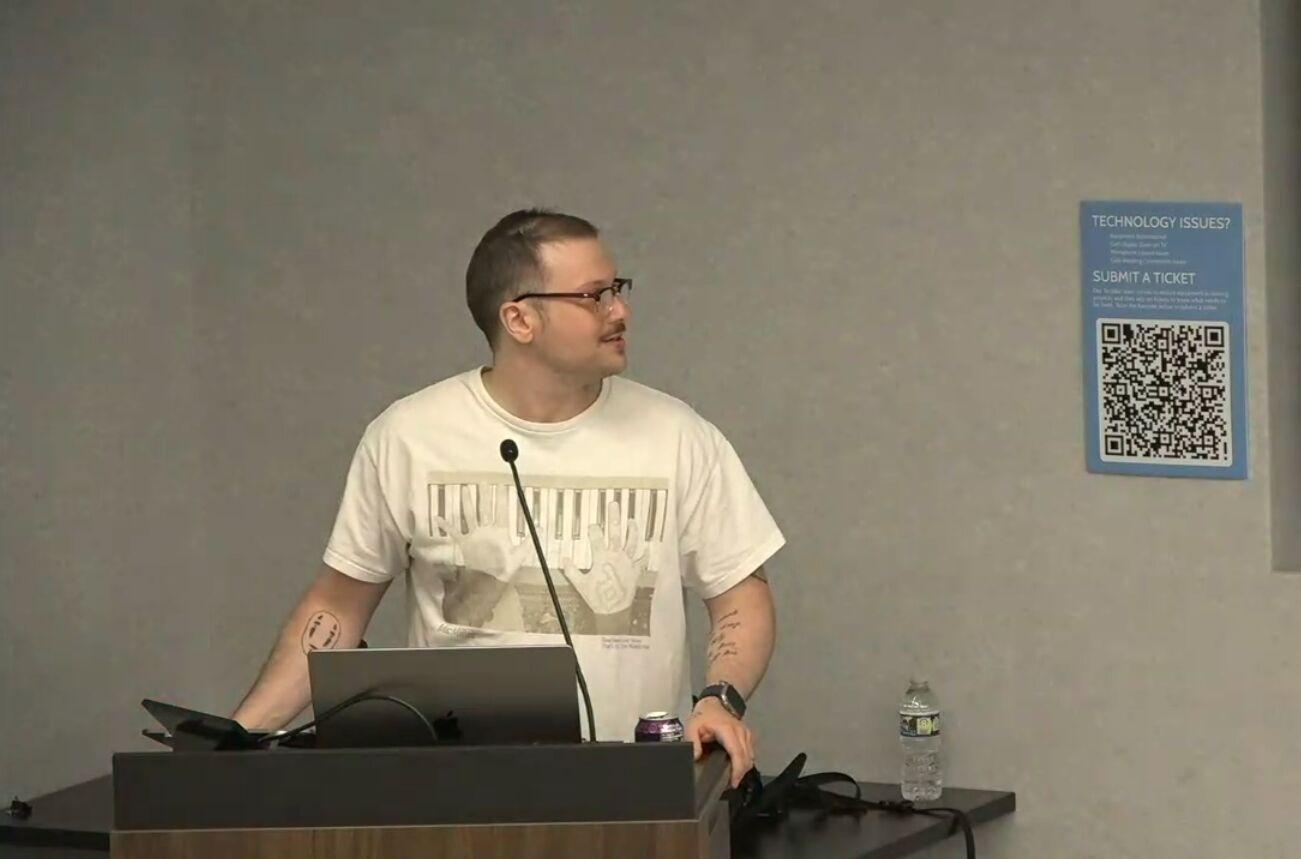
I've given talks, taught courses on popular topics in .NET and Go, community is huge and through my career I've got to meet and learn from some of the best engineers in the world.



Step into my laboratory
chemicals and potions I use to craft cutting edge solutions
Crafted engineered solutions.
Measuring, mixing, and combining technologies...
The Result
Technology is just the means. The end is a solved problem.
Problem
Slow Deployment Cycles (90+ mins)
Problem
Opaque System Failures
Problem
Unreliable Legacy Data Sync
Selected Personal Work
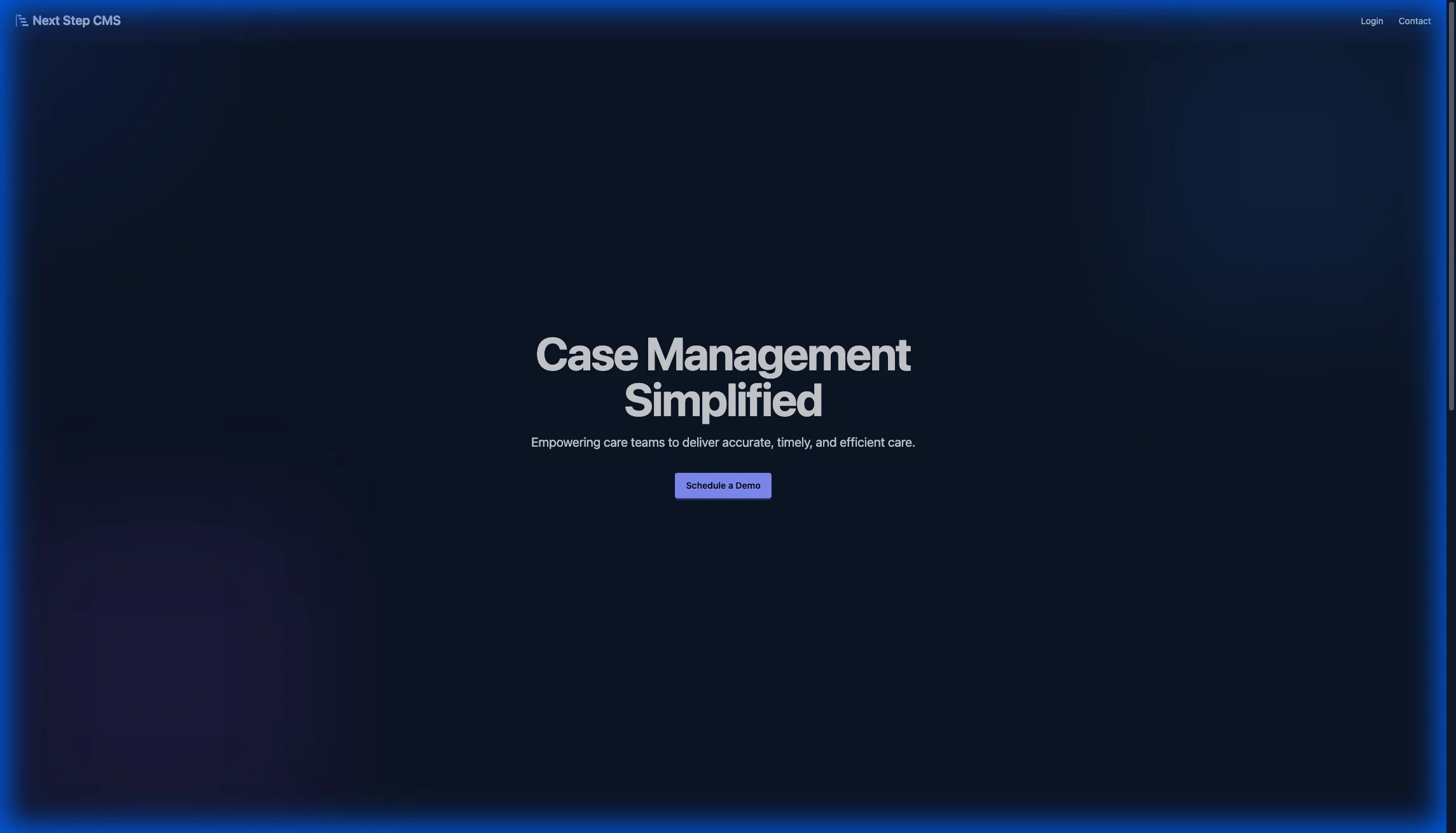
Next Step CMS
Architected a HIPAA-compliant SaaS for chemical dependency treatment facilities, scaling to support thousands of daily transactions.
Built a high-performance SolidJS frontend (45% faster rendering than React) backed by a containerized Go service for horizontal scalability.
Implemented automated reporting and background processing systems to handle sensitive PHI data securely across multiple organizations.
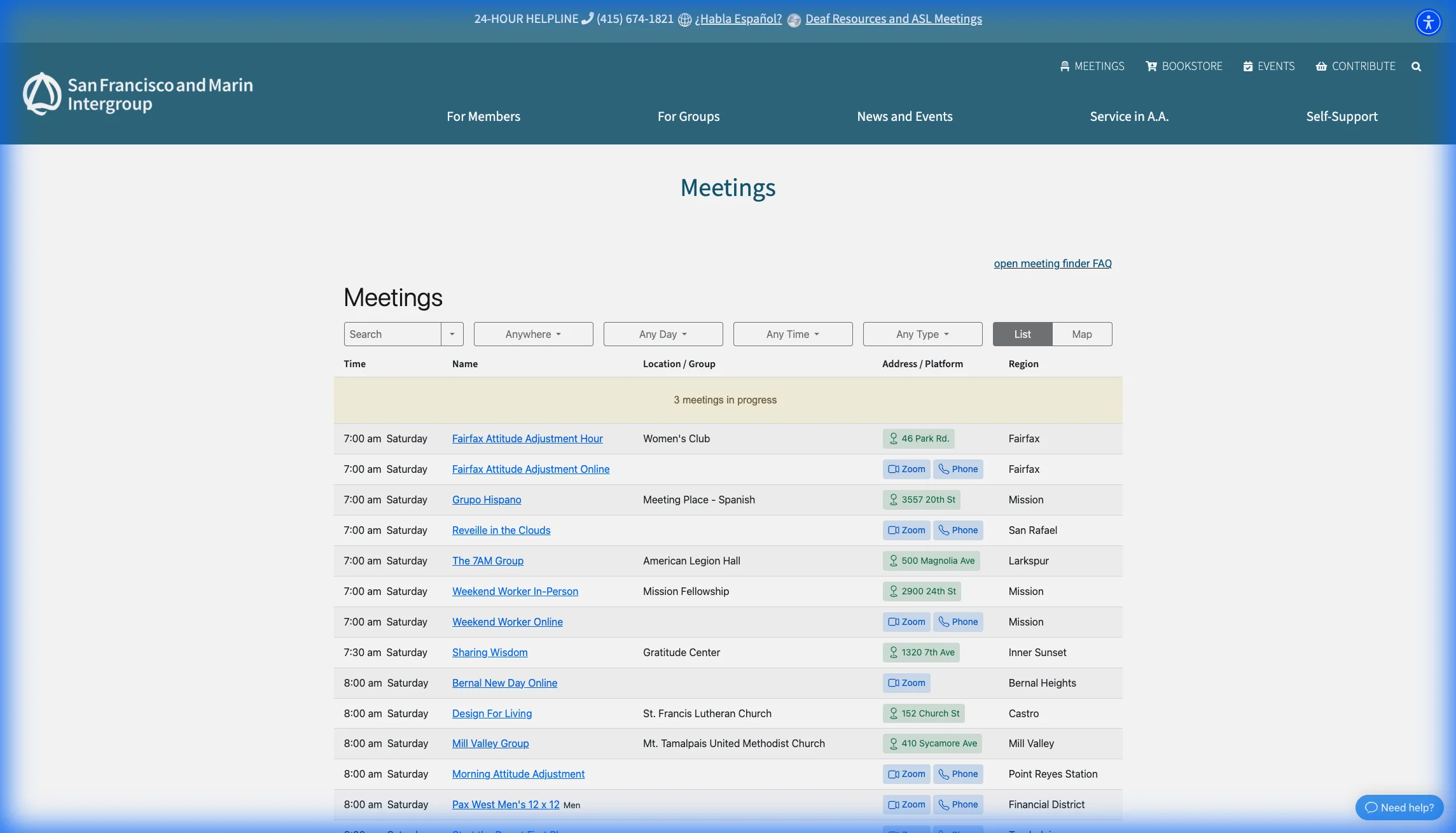
Code for Recovery - TSML UI Plugin
Contributed to an open-source 12-step meeting finder used by recovery communities nationwide.
Optimized the React/TypeScript plugin for accessibility and mobile responsiveness, critical for users in crisis situations.
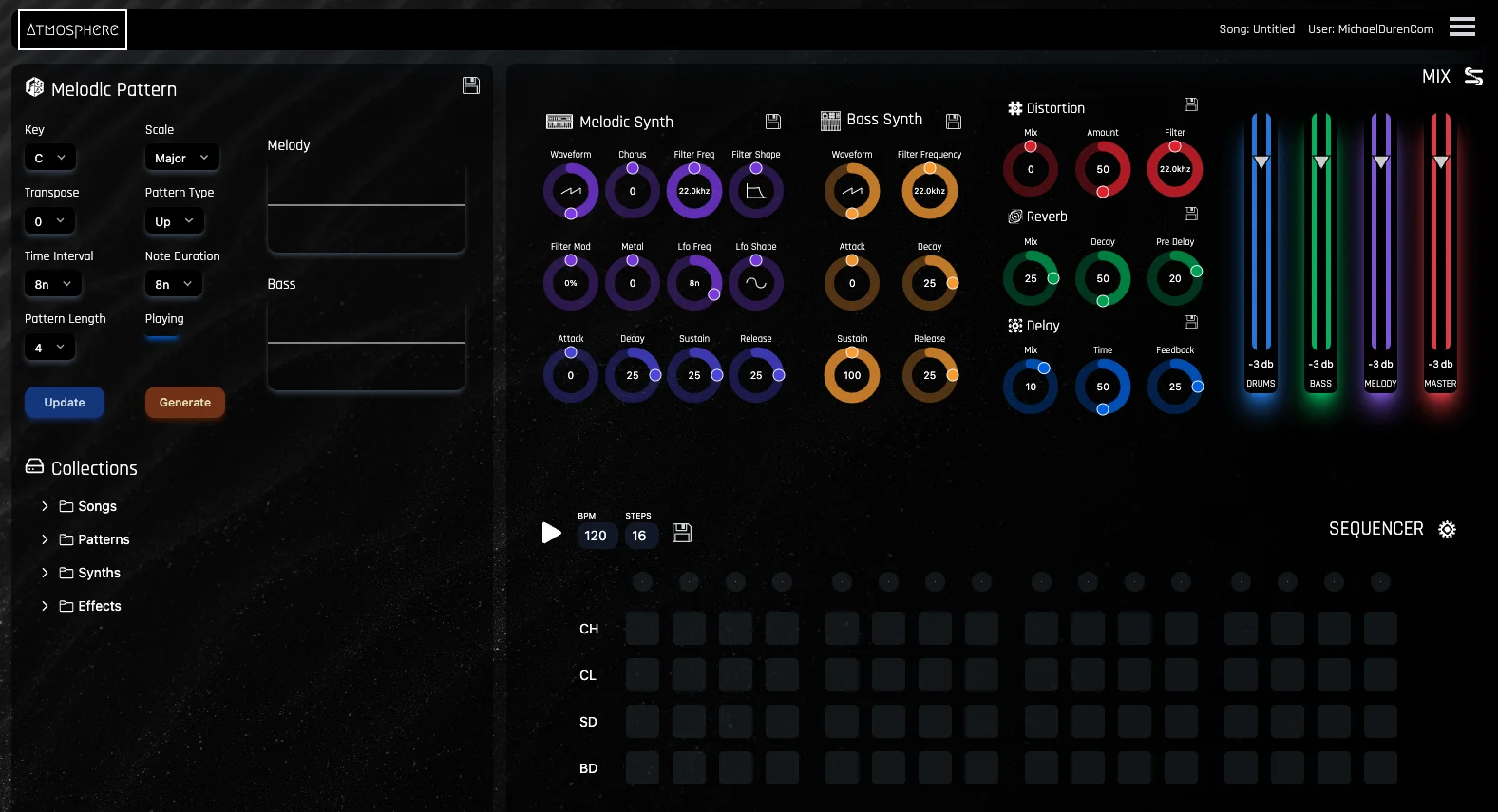
Atmosphere
Built a real-time web-based synthesizer using the WebAudio API with complex state synchronization via Redux.
Developed a full-stack architecture with a C#/.NET backend for managing audio serialization and user presets.
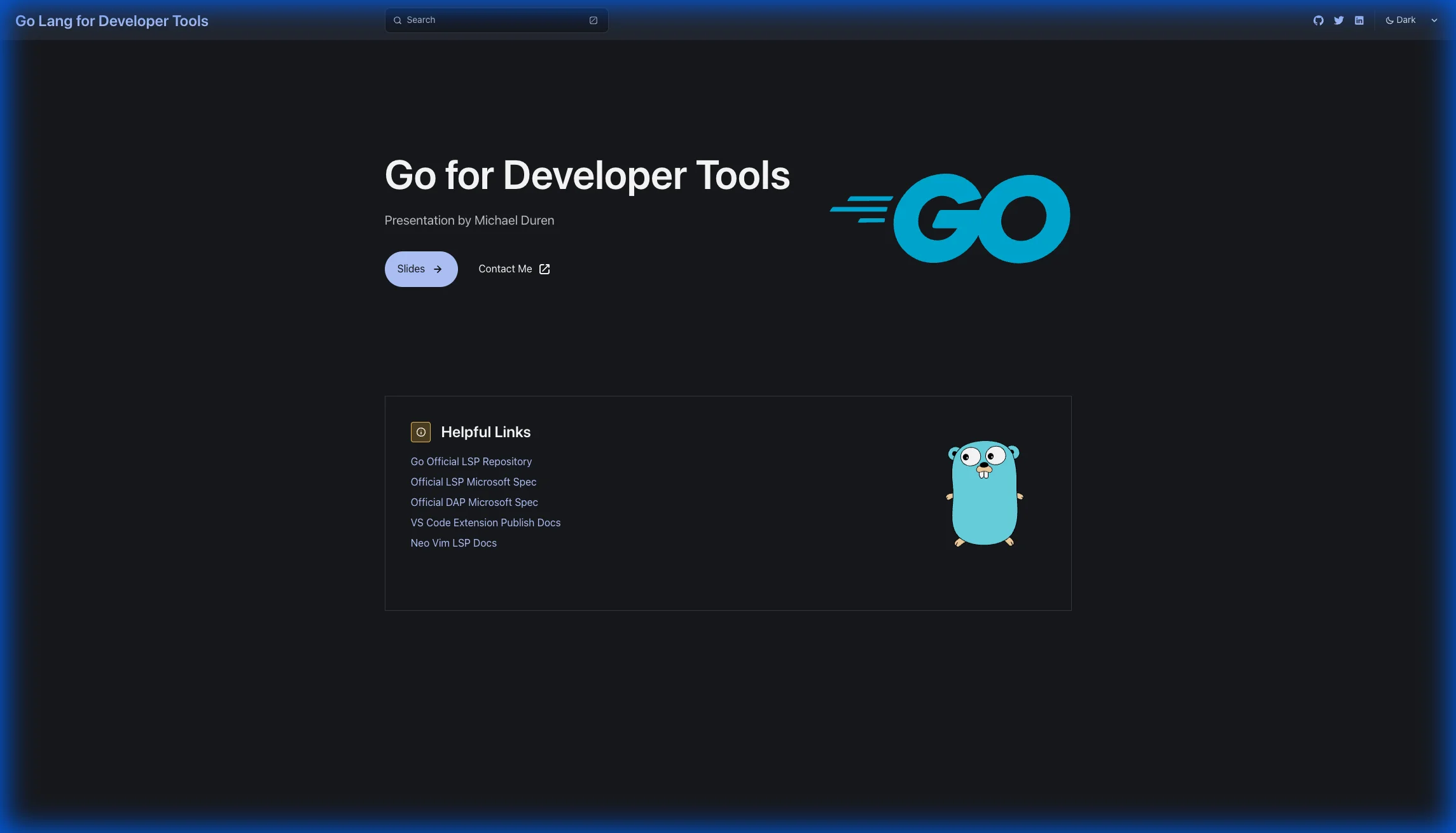
Developing Developer Tools with Go
Created a comprehensive course on building Language Server Protocol (LSP) tools from scratch in Go.
Teaches protocol design, parser implementation, and JSON-RPC communication for creating real-world editor tooling.
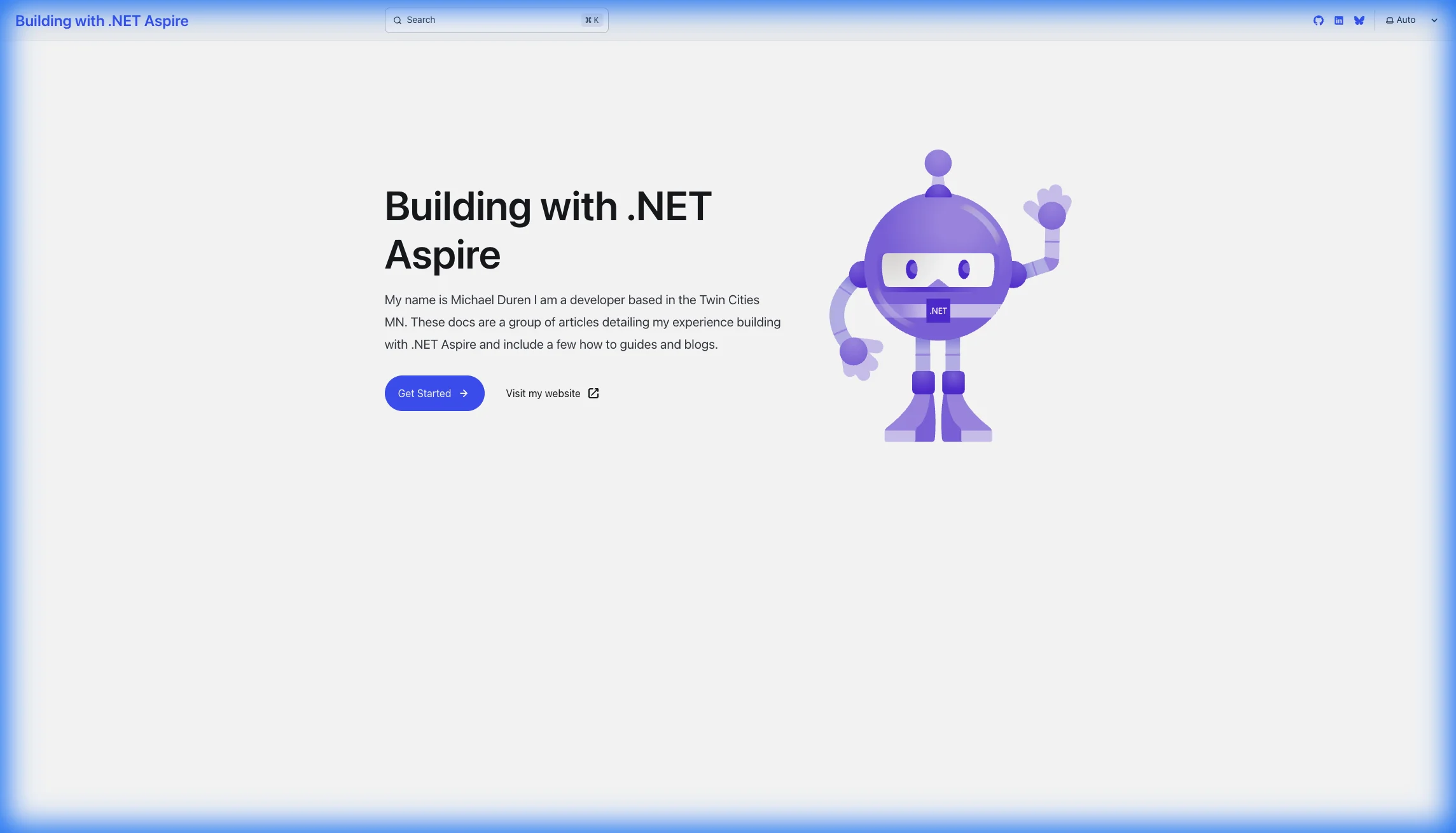
Building with .NET Aspire
Developed an educational platform teaching cloud-native architecture and distributed systems design with .NET Aspire.
Focuses on practical implementation of microservices, observability, and resilient container orchestration.
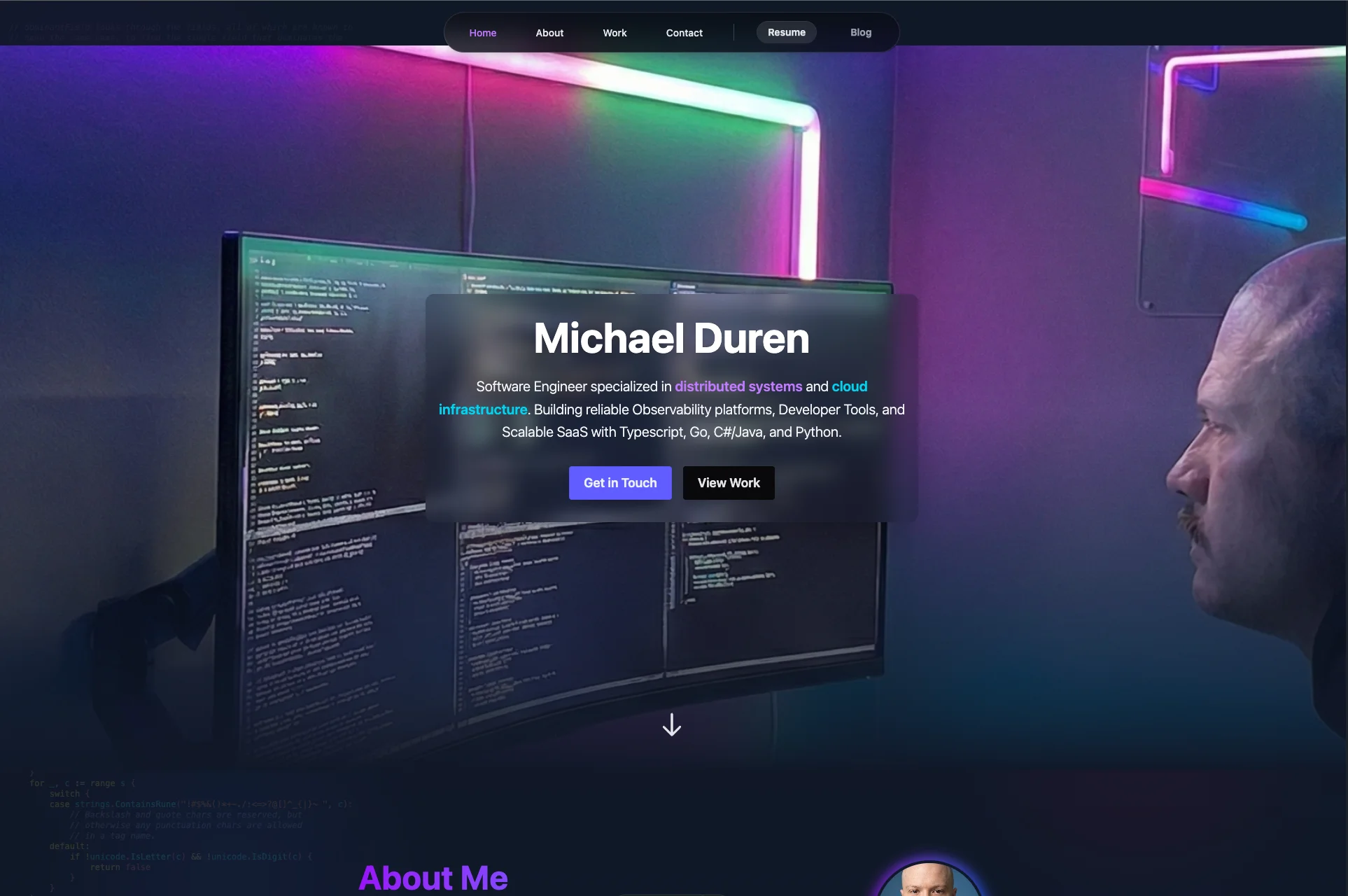
Portfolio
Designed a high-performance static site using Astro and Tailwind CSS with zero-JavaScript defaults.
Implemented custom interactions with vanilla TypeScript to ensure optimal loading speeds and accessibility.

Let's Build Something Great
Have a project in mind or just want to say hi? I'm always open to discussing new opportunities and ideas.
Open to Work